


|
Treatment For Drug AddictionTreatment for drug addiction stops drug use, controls cravings and helps the addict deal with long-term recovery. Treatment programs, counseling and recovery coaching works to help the drug addict maintain a life without drug addiction. But recovery coaching is only suggested once the addict has completed a rehab program, was in an AA program or had a slip and wants to get on track. Recovery is not as simple as saying ‘don’t use drugs’. Drug addiction is much more complex than that. There can be intense and sometimes uncontrollable cravings leading to compulsively seeking out drugs and because of this, treatment programs must incorporate many components. Not only do addicts have to stop using drugs, but they must learn to maintain a drug-free lifestyle and handle the stresses of every day life. Treatment Programs.Research has demonstrated that treatment can help addicts stop using, learn relapse prevention as well as recover their lives. Based on research in the mid-1970’s, it was found that: No treatment is appropriate for all. To be effective, treatment must focus on the individual’s needs, not only drugs. Treatments should not be short term. It requires follow-up. Treatment for drug addiction can be effective, even if it’s not voluntary. An intervention may be necessary Many drug addicts have mental disorders as well as addiction. Counseling and other behavioral therapies are commonly used and effective. Medications combined with counseling can work well, depending on the drug of choice
MedicationsCertain medications can help reduce withdrawal symptoms. Medical detoxification is often required. However, detox should not be considered ‘treatment’. It’s a stepping-stone to getting treatment. Medications can help brain functioning return to normal, as well as prevent relapse by diminishing cravings. The therapy process, helps the addict modify and change attitudes related to drug use. Different treatment for drug addiction is available depending on the severity of the problem. For those with severe addiction, there are therapeutic communities (TCs) and structured residential programs. TCs are particularly helpful for those with long history of drug use, caught in the criminal justice system, or addicts who need to learn or relearn skills to re-enter society. Higher functioning addicts can benefit by group or private drug counseling with cognitive-behavioral techniques. This helps addicts acknowledge, avoid and handle their problems without resorting to drugs. For more information on drug addiction:
|

Like Us
Click 'LIKE' and get access to 100s of Free Self-Help Books and more
FREE SELF-HELP NEWSLETTER OPT-IN
|
Stop Negative Thinking Now
Stop Negative Thinking Now! Public Speaking Confidence Banish your fear of public speaking in minutes. Exercise Motivation Booster Boost your motivation to exercise. Ease Anxiety Melt away anxiety & fear using hypnotherapy. Quick Confidence Booster Quickly build your self confidence before stressful events Think Thin Adopt the thought strategies of slim people. Overcoming Shyness Overcome Shyness and Social Anxiety. Super Slim Me Program your mind with your weight loss goals Self Esteem Booster Boost your self esteem today - feel better in minutes Improving Concentration and Focus Create powerful focus and concentration. |
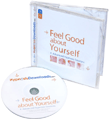
(CD)
The Feel Good About Yourself CD contains 3 specially selected hypnosis sessions.