|
A codependency relationship " title=" " title=" " align="right" data-pin-media="http://www.untwist-your-thinking.com/images/747910_19782672.jpg" style="margin-left: 12px; margin-top: 8px"> " align="right" data-pin-media="http://www.untwist-your-thinking.com/images/747910_19782672.jpg" style="margin-left: 12px; margin-top: 8px">
is not a healthy relationship. In a codependency relationship, you’re a love addict. You have such low self esteem that you’ll do anything with the hope that the person will love you back. A codependency relationship can be abusive, and even if you leave, you go back, thinking that this time it will be different, but it doesn’t change. You’re just justifying to yourself why you’re in the relationship in the first place. You say things like, “he’s really not that bad.”, “It’s my fault, I shouldn’t have been mad”. You’re excusing the behavior, but there’s no excuse. It hurts.
That's codependency!
This information can help you discover if you or someone else you know is in an abusive relationship. Destructive criticism: shouting, teasing, accusing, threatening, labeling. Pressure: sulking, disconnecting the phone, threaten to commit suicide or take away the children. Telling lies to your friends and family about you, and not allowing you to make decisions. Disrespect: diminishing you in front of others, not listening or responding, interrupting your phone calls, taking money from you without asking, refusing to help. Breaking trust: lying, withholding information, jealousy, having other relationships, breaking promises and agreements. Control: monitoring or blocking calls, ordering you where to go or not go, preventing you from seeing friends and family members. Harassment: following you checking up on you, opening your mail, embarrassing you in public. Threats: using physical size to intimidate, shout you down, destroying your possessions, breaking things, punching walls, wielding a knife or gun.. Sexual violence : using force, threats or intimidation to make you perform sexual acts, having sex with you when you don’t want it, any degrading treatment based on your sexual orientation. Physical violence: punching, slapping, hitting, biting, pinching, kicking, hair pulling, pushing, showing burning, strangling, raping. Denial: saying the abuse didn’t happen, saying you caused the behavior, being gentle publicly, crying and begging for forgiveness, saying it will never happen again. Saying I love you is not the answer. You can not show or be told how to please. This will never be a healthy relationship. You’re a love addict when you keep going back for more. The longer you stay, the more your physical and emotional health is diminished. Others have gotten out of it, and so can you, but you need a support system.
If you or others are in a codependency relationship there are pages on this site that can help you. You can get into a
healthy relationship
but you have to take the risk and change. If you have a question on a codependency relationship, you can help others by sharing it, or contribute with your advice.
Here's how to ask.
Another effective way of getting help is with coaching. This is not therapy or counseling. It's team work -- and you and the coach are the team. You tell your coach what you want to achieve and similar to any sport, you're coached to get the goal. Coaching is helpful for codependents. Try a free 30 minutes It can be done whenever it's convenient, in your home and office and it helps you to create a new positive life. However, codependents often think that they are the only ones with a relationship addiction
there are others
(Source: Davina James-Hanman, British Broadcasting Company)
|

Like Us
Click 'LIKE' and get access to 100s of Free Self-Help Books and more
FREE SELF-HELP NEWSLETTER OPT-IN
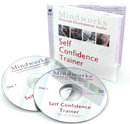
(Double CD)
The Self Confidence Trainer leads you step-by-step towards greater confidence and self esteem.
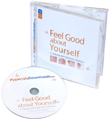
(CD)
The Feel Good About Yourself CD contains 3 specially selected hypnosis sessions.